

As you may know my daily driver is a 1992 Toyota Pickup truck. Pickup is capitalized because that was the model name that Toyota gave its mini-truck.
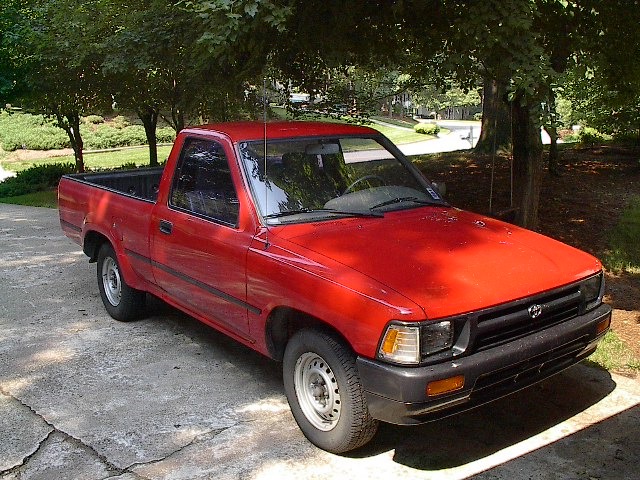
This red truck started its life as the most basic (cheap) truck that Toyota offered in the US that year. It came with a 2.4 liter four cylinder engine (the 22RE) and had no power steering. The only reason it has air-conditioning is that it was originally sold in Louisiana.
It didn’t have a day/night mirror in the interior. That would have driven the cost up. Nor did it have a right hand outside mirror or a sliding glass rear window. The instrument cluster was dominated by the speedometer, with only “idiot” lights to let you know the status of any of the other aspects of the running condition of the vehicle.
It didn’t even have a rear bumper, as four women who have rear-ended the truck have come to find out (hence its nick name of “Chick Magnet”). It was a very basic pickup truck.

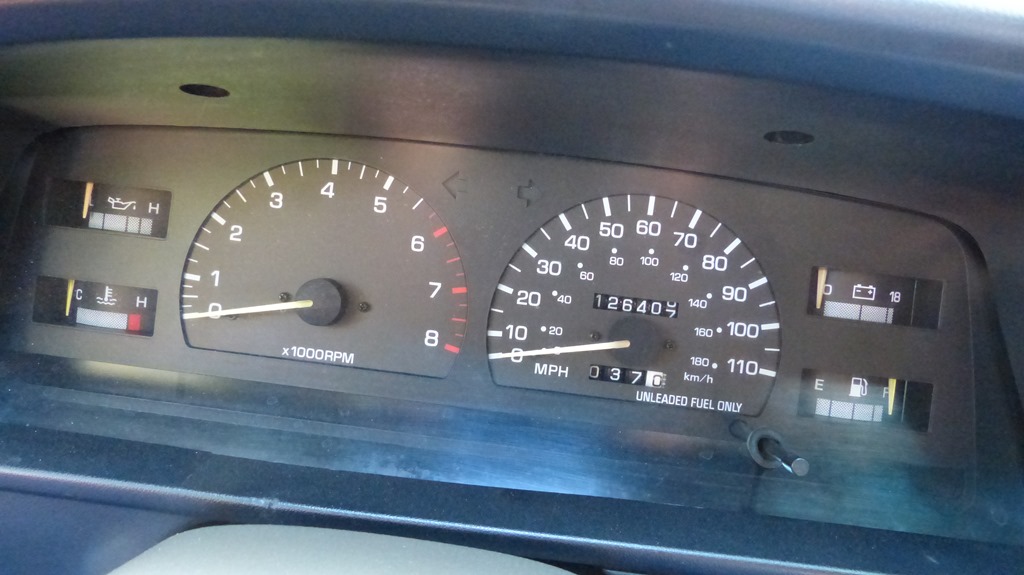
Being the kind of owner that I am I could not live without adding some modifications of value to my little red daily driver. Over time I installed a digital clock, a right side mirror, a day/night mirror, a sliding glass rear window, a meaningful radio and speakers and an instrument cluster from a 4 Runner.
Since the truck is a manual five speed it just didn’t make sense for it not to have a tachometer and it was not hard to find a used cluster from its big brother the 4 Runner that would work, fit, and provide a great deal more information such as oil pressure, voltage, coolant temperature, and the all-important tach.
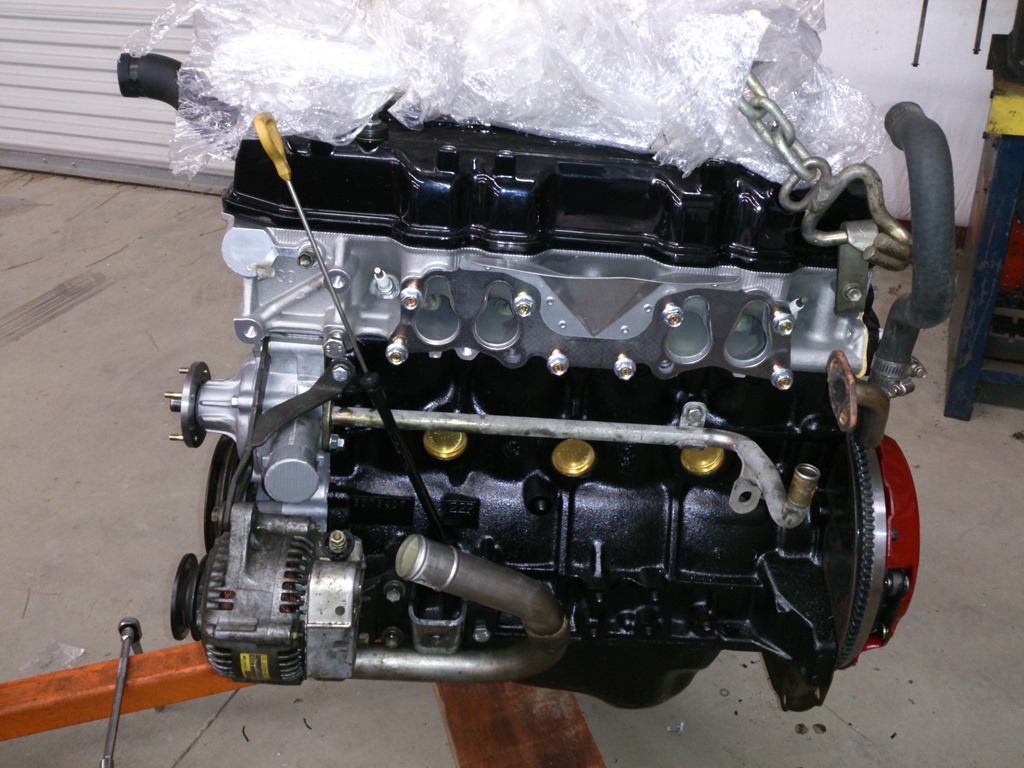
These upgrades worked just fine through the years as other restorations took place. I had the bench seat reupholstered, rebuilt the suspension with new ball joints and tie-rod ends, then installed a set of Bilstein shocks all around. Eventually the engine was replaced with a 2.6 liter stroker from the folks at L. C. Engineering as well as their stainless steel headers and exhaust system.
Over time there were some odd behaviors coming from the instrument cluster and the speedometer in particular.
Driving along there would be time when the speedometer would not seem to work at all. The needle would be at its resting peg at zero and then, after a mile or two, it would jump up and resume its usefulness. Very odd.
The problem did not seem to be predictable either. Sometimes the speedometer would function just fine right from the get go and other times it would stay asleep for a few miles. Eventually I was able to cure the problem, but not because I had a brilliant flash of insight.
I had decided to enhance the grounds between the engine block and the chassis. I thought that it might improve the engine’s smoothness and performance, which it did. It also made the intermittent speedometer act normal. My grounds went from the negative terminal of the battery to the intake manifold and from the valve cover to the firewall. These were 4 gauge and 8 gauge wires with serious terminal lugs.
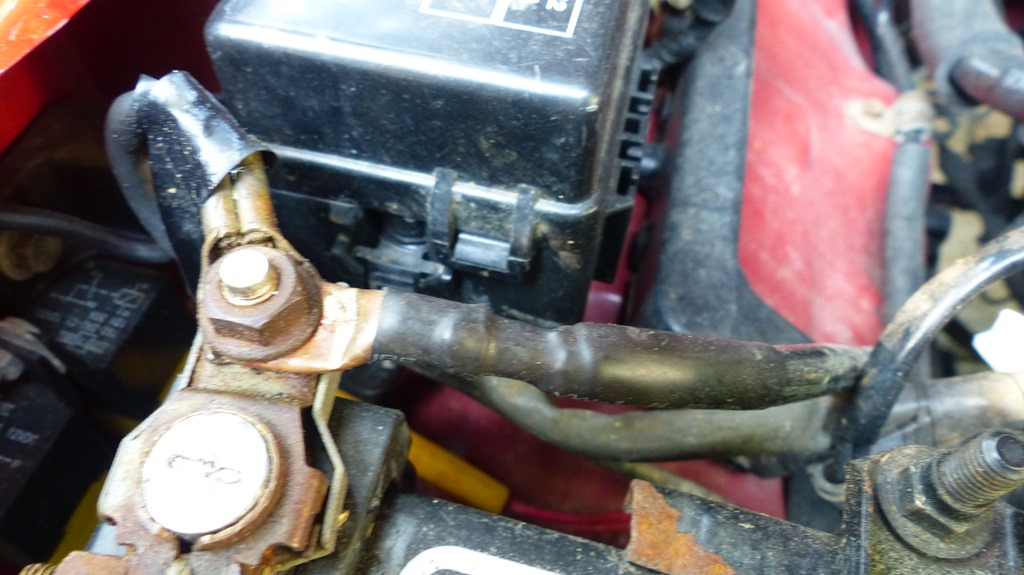
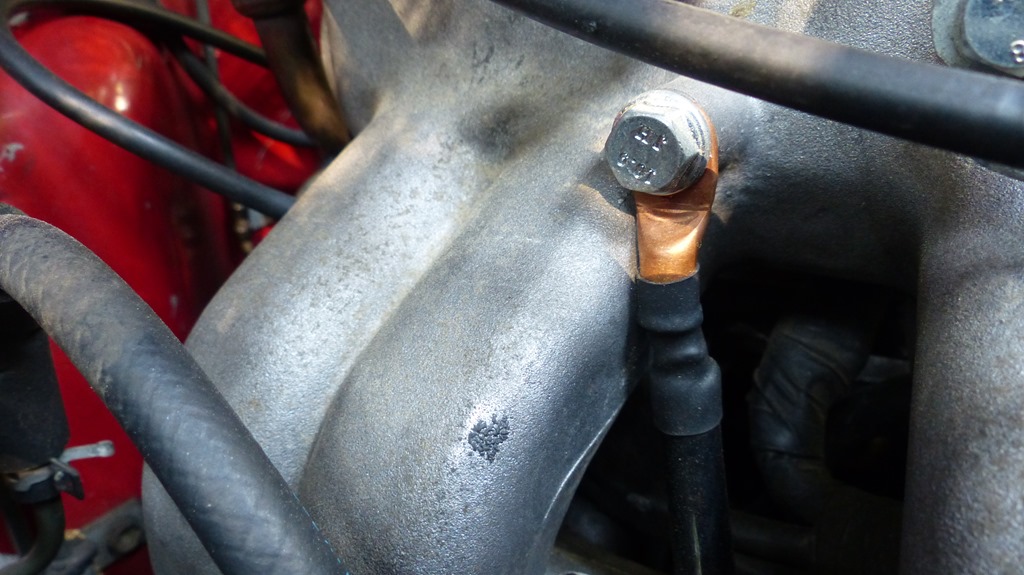
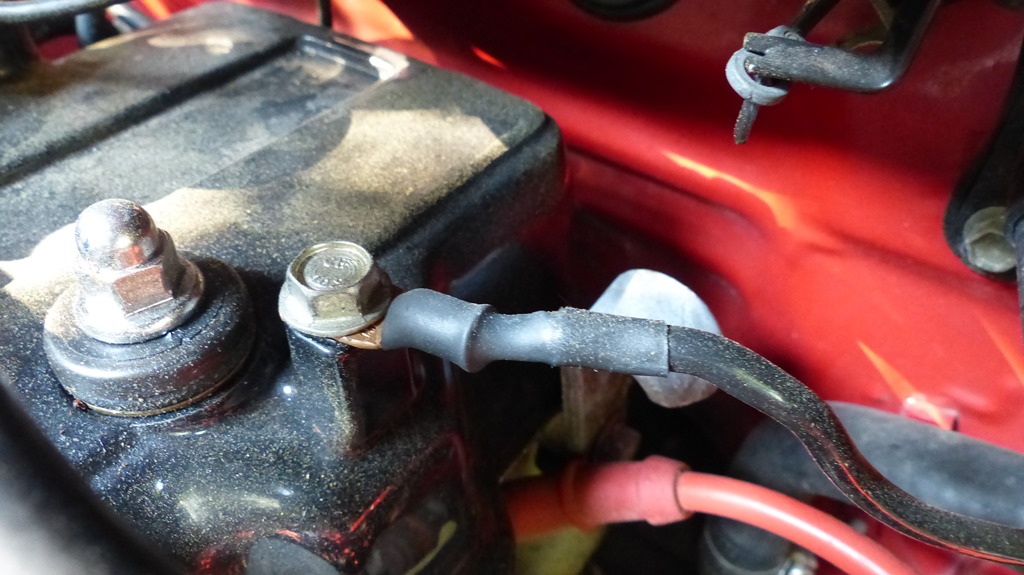
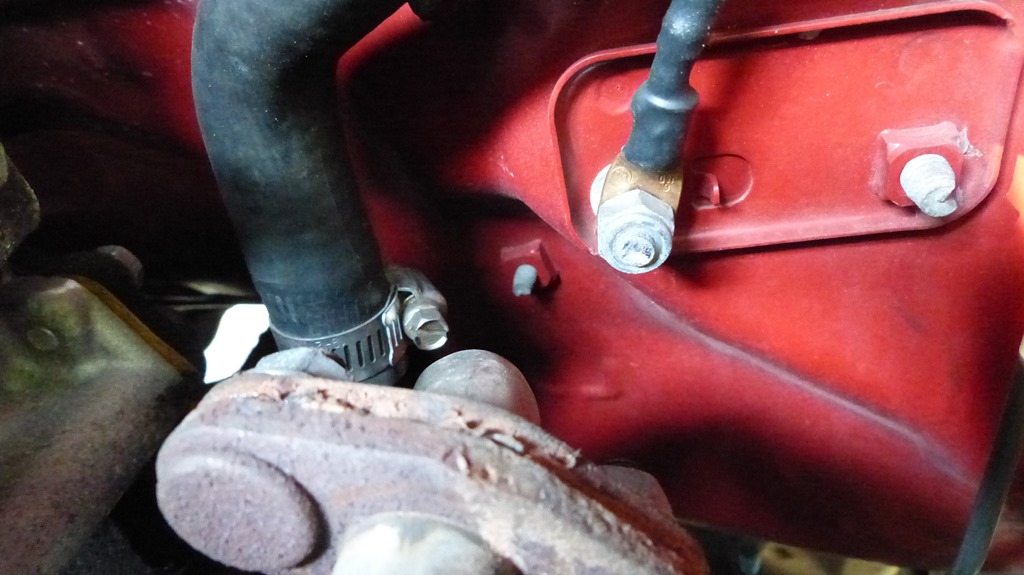
The cure for the lazy speedometer was a nice surprise and the engine did run smoother and with a bit more power.
Over time another gremlin with the speedometer showed up. As I drove around and would put on the turn signal the needle would dive to zero and recover. Now this was really bizarre. I immediately suspected the turn signal switch and scoured eBay for a reasonably priced replacement.
Lucky me, I came across a NOS (new, old stock) replacement. It was a good price and included free shipping. Upon receipt there was an added bonus. It had intermittent wiper control built in. It was a perfect swap for the original and I now had another cool feature added to the red pickup.
Still, the needle on the speedometer would do a dive when I used the turn signals. Not every time mind you, but most times. Talk about frustration.
It was time to head to the local Toyota dealership and pick up a new flasher for the turn signal. The flasher is actually a relay that clicks on and off when energized by the turn signal switch. It is not easy to get to either.
I had to remove the bottom of the dashboard, and feel my way to the flasher. It is mounted to a tab on the tube that supports the dash. It not only flashes the turn signals it emits a clicking sound that it transmits through the hollow tube so that you are reminded that your signals are flashing.

The old flasher consisted of a timed relay and a socket that actually rotate the relay contacts so that the logic was reversed. In this photo you can see the flasher and the intermediate connector.
The new flasher dispensed with the logic changer and plugged right in to the white connector. I put the dash back together and headed out onto the road.
Every time I used the turn signal I braced myself for a diving needle, but it never appeared. Voilà! Problem solved.

I love happy endings.


 JIM'S GARAGE
Leave a comment