

Hydraulic brakes were a huge improvement over the mechanical brakes originally used in motor cars. Disk brakes replaced drum brakes and braking capacity was further improved. 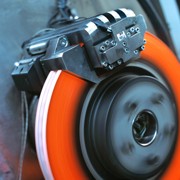
In the last thirty years ABS has gone from an option on exotic cars to a standard on most vehicles. Each of these steps has resulted in shortened braking distances, enhanced control under braking, and proved to be more reliable.
Now comes a brake technology that might prove to be a quantum improvement over what is available today. It is called Electronic Wedge Braking and the prototype has been developed by the Seimens Corporation of Germany.
This isn’t the first time that electronic braking has been explored. The problem had been the limitations of the 12 volt systems being used in automobiles today being unable to drive a motor with enough power to stop your average car. Siemens method uses the cars own energy to slow it down.
As with most things in cars today, it relies on sophisticated sensor technology and micro processing to ensure that the brakes don’t just lock up. Using the vehicle’s own kinetic energy, the new system claims to need only one tenth of the actuating energy used in today’s hydraulic systems. The bottom line is that it should allow your car to stop in about half the distance you can today.
This new electronic wedge braking system will integrate ABS and electronic stability programs with a reaction time 50 to 100 milliseconds faster than existing ABS systems. Shorter braking distances will be combined with better vehicular control in adverse conditions.
This promises to save weight, eliminate the problems with hydraulic fluid, and provide you with a higher level of braking performance. By 2009 you should start seeing them offered on cars and trucks.
Just make sure your battery stays in good working order and see that you have vehicle design protection from being rear ended.


 JIM'S GARAGE
Leave a reply to mark Cancel reply