

Have you ever dreamed of taking a Lotus Elise around a world famous road racing track? Have you ever dreamed of letting the car drive itself? On July 26, 2007 a Lotus Elise did just that when it circled Virginia International Raceway at close to 50 mph relying totally on sensors and computer programming to guide it around the 3.27 mile track in the fog.
Insight Lone Wolf Driving at VIRginia International Raceway
This is history!
Yesterday I met up with the NC State University team that was responsible for this car and its abilities. They were working to improve the air conditioning capacity in order to keep the multiple computers cool enough to do their job.
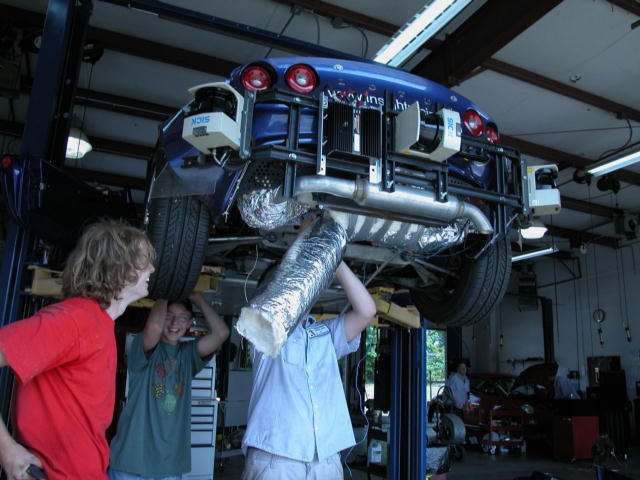
This is all part of the preparation of the Lone Wolf‘s entry in to the DARPA Urban Challenge competition scheduled for November 3, 2007. DARPA has sponsored this challenge for the third year in order to develop a military capability to conduct logistic supply without requiring the use of manned vehicles.
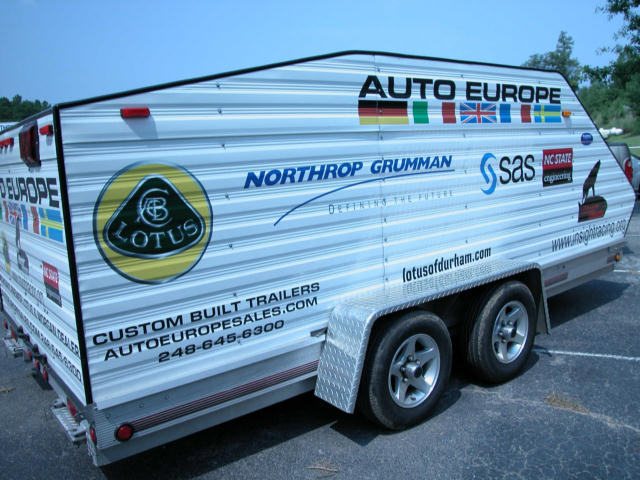
Lotus Cars is participating as a major sponsor by supplying the Lotus Elise that this team is using as their base vehicle. In addition, Lotus engineers grafted on front and rear mounting frames for the LIDAR sensors that the team uses, as well as converted the car to a sequential automatic transmission and re-calibrated the car’s suspension.
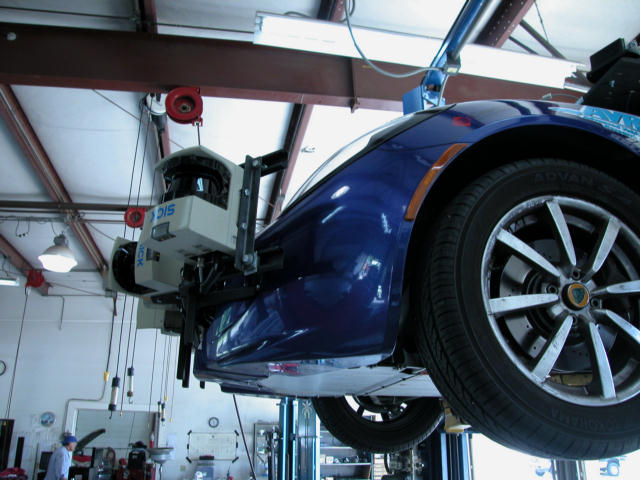
Most of the over 50 competitors in the DARPA challenge are using SUV-type vehicles for their base so the Lone Wolf is quite unique.
This is not a radio controlled vehicle. It makes its decisions on its own and is designed to interpret road and traffic conditions so that it obeys traffic laws as it transverses an urban course. In addition to the LIDAR sensors it uses RADAR and video cameras for input into the many computers running Linux and providing input into the servos controlling steering, braking, and acceleration. Programming of this sophisticated piece of technology is constantly undergoing refinement.
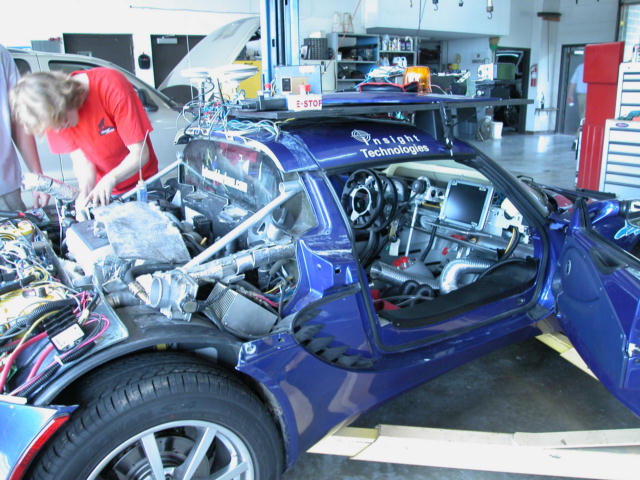
Next stop is for the car to visit some of its sponsors as it prepares for the National Qualification Event in October of this year.
This team’s work has been highlighted on local television news, so keep an eye out for it to appear on the Discovery Channel soon.


 JIM'S GARAGE
Leave a reply to jimsgarage Cancel reply