

Many of you out there have been waiting impatiently for the installation of the Tomei turbocharger in the Evo IX. Believe it or not, I have too.
A couple of weekends ago I started on the installation with great hopes of sharing the experience with all of you. While I did accomplish the installation I have run into a significant problem that prevents me from concluding this chapter. After installing the new turbo and radiator the first test drive ended with a check engine light and a P0500 code.
In order to save you some time in looking up the P0500 code, it refers to the vehicle speed sensor that is built into the transmission. Fortunately there is nothing wrong with the speed sensor, but there appears to be a voltage problem that prevents the ECU from reading the sensor. I will continue to track down the source.
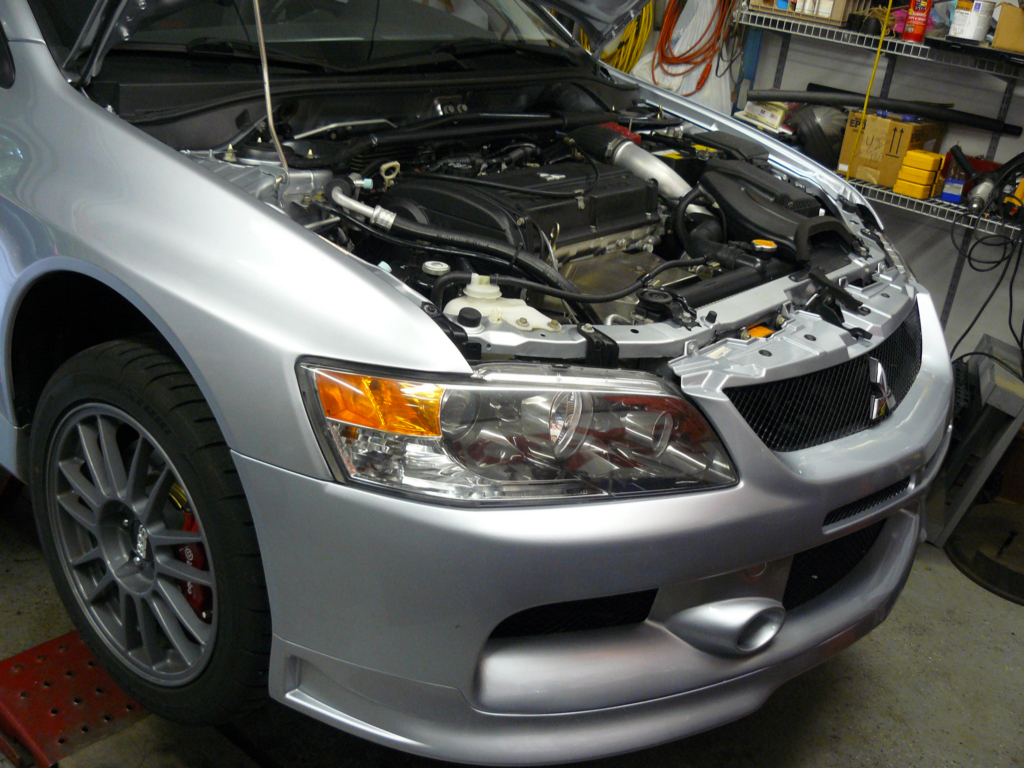
In the mean time I will provide you with the adventure of installing the Tomei ARMS turbo.
First step was to make certain that I had everything I needed and then get the car up in the air. Luckily Jim’s Garage has a lift that makes getting the car up to a nice working height a snap. I had spent the previous days making stops at auto supply stores to get fresh anti-freeze and distilled water as well as all the appropriate fasteners for the installation.
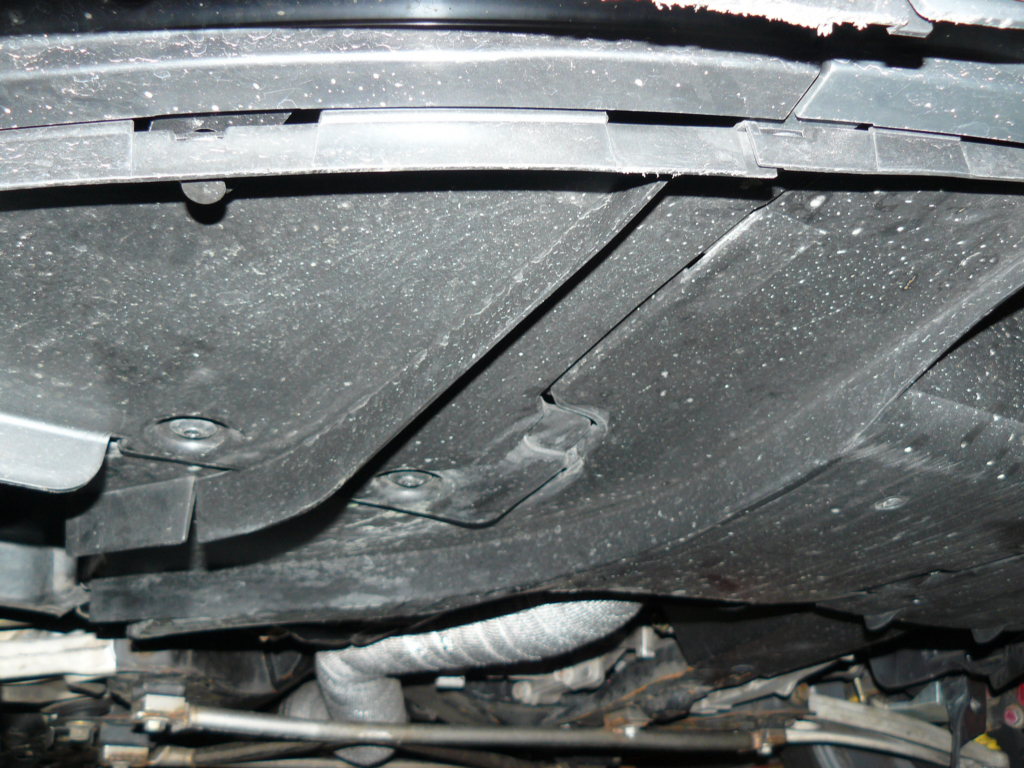
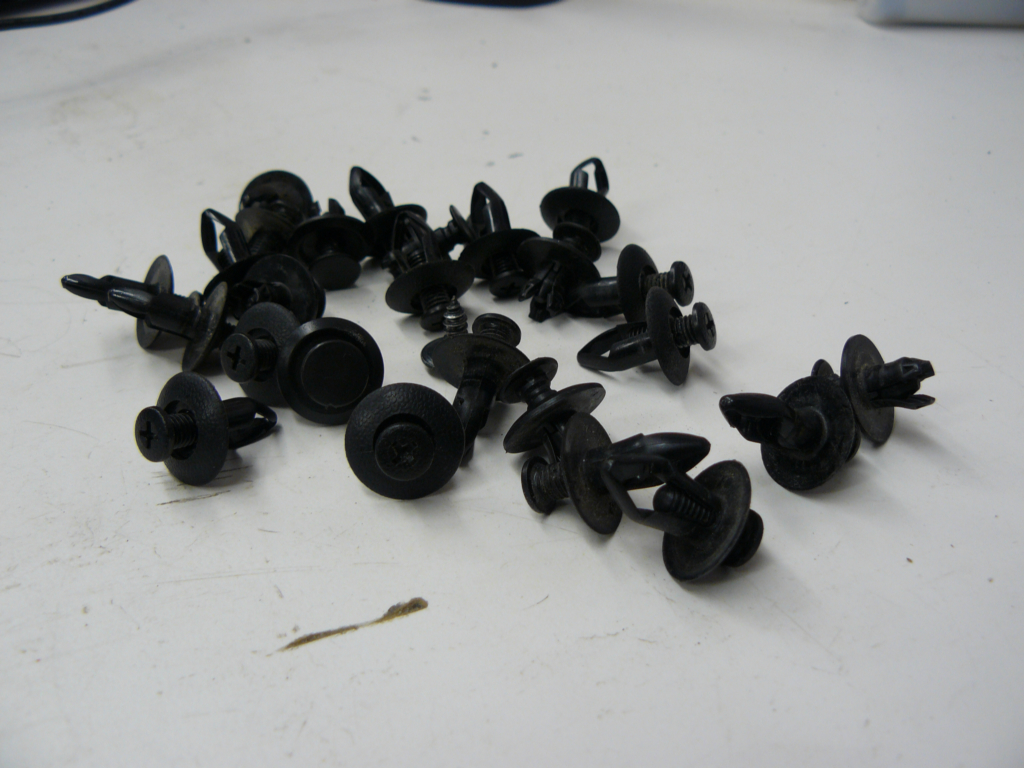
With the car up in the air it was time to remove the under-tray that covers the bottom of engine bay. This consists of unfastening twenty to thirty “scrivets” and a few screws. If you own one of these cars it is a good idea to have plenty of spares on hand, too.
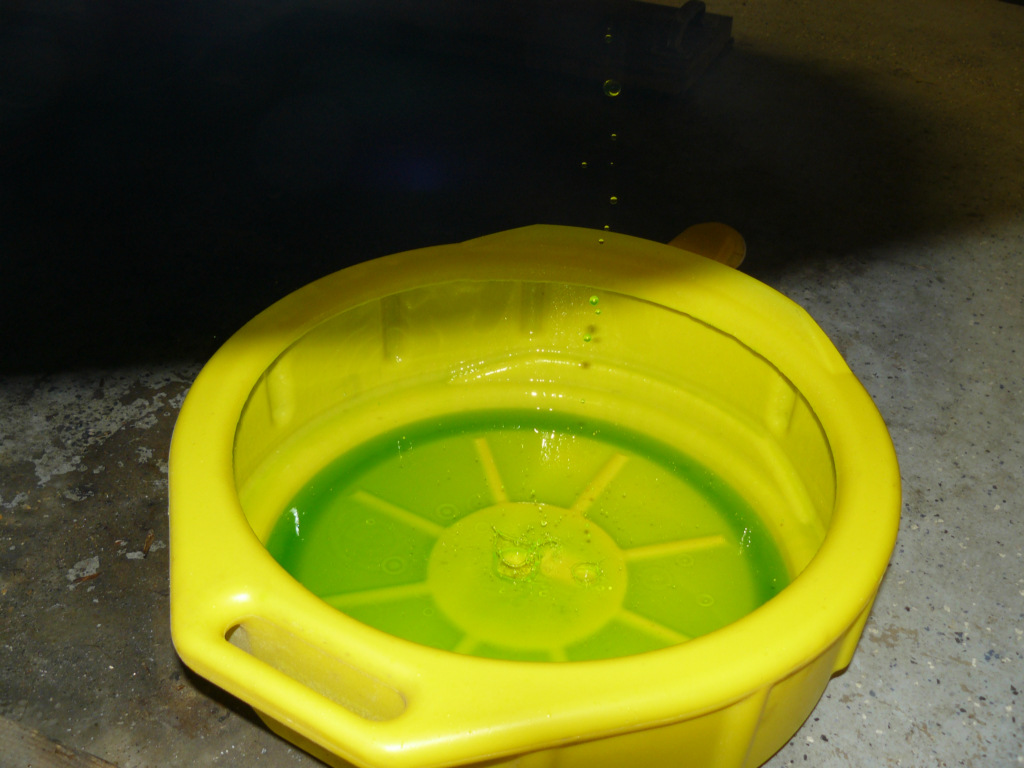
With the under-tray out of the way I drained the coolant into a catch pan. That gave me a chance to undo several items from the top of the engine compartment. The air intake was removed along with the heat shields over the stock turbo. Then I loosened the radiator hoses and worked on removing the O2 sensor.
From under the car I removed the bolts and springs that hold the down-pipe to the turbo as well as the factory bracket that holds the turbo to the engine block. It was also a good time to get another catch pan and unbolt the oil return from the turbo. This goes from the turbo to the oil pan and since Tomei provides new gaskets, I removed it completely and cleaned up the piece.
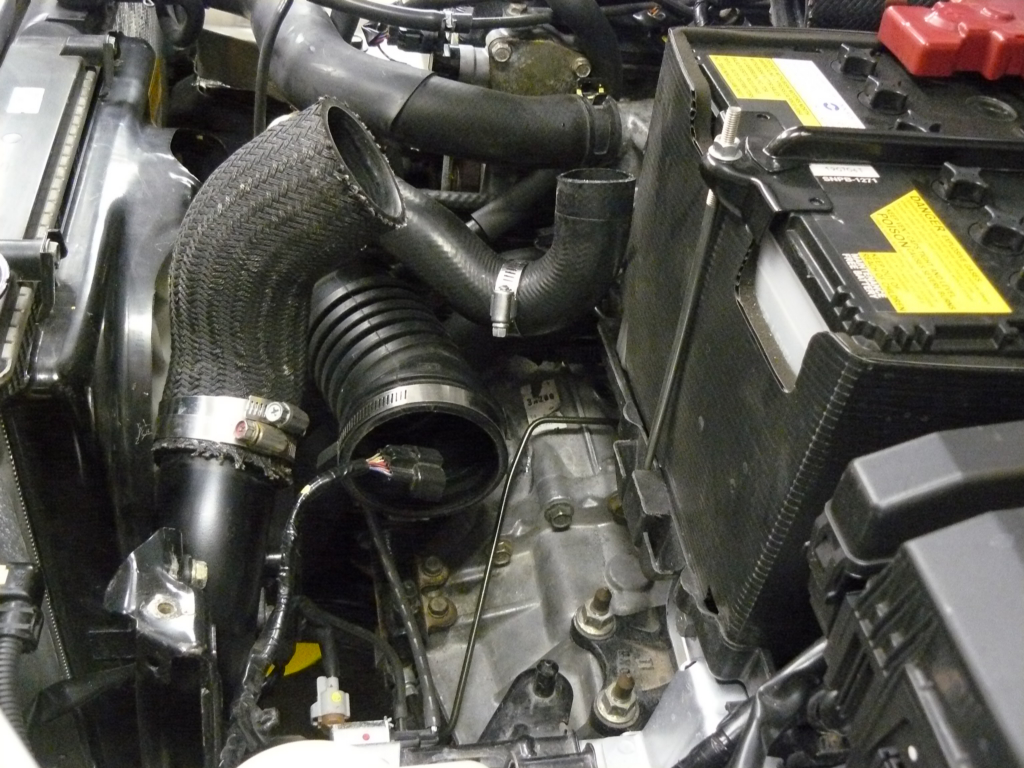
With the radiator drained it was time to pull the old radiator. A ten thousand mile radiator is not necessarily and old part, but this one had a bunch of wrench rash on it. There was a new Mishimoto unit ready and waiting for installation. I did find that I had to purchase some rubber bottom mounts as the ones on the old radiator were either worn or incorrect. I found it easier to remove the radiator fan and motor than to try and pull it as one assembly.
There were two nuts and two bolts holding the turbo to the exhaust manifold and I removed them. With the radiator out there was plenty of room to remove the turbo assembly.
Then began the job of installing the new O2 sensor housing on the new turbo with all the new gaskets that Tomei supplied. There were also new tubing for oil and coolant to the turbo. These came with new banjo bolts and crush washers. It was easiest to install them before the turbo was bolted on. Minor tweaks to the tubing were made by sticking a Philips screw driver in the tubing and gently reforming them.
With everything bolted to the turbo and fasteners torqued to the proper specifications it was time to bolt on the new unit.
The folks at Tomei really make a nice unit and it bolted up just as the factory turbo had. I used fresh fasteners and torqued them to specs, too. Then I installed the O2 sensor and plugged it into the connector on the valve cover. Next was the down-pipe bolts and springs. I ran the threads through a die and coated them with anti-seize before bolting the pipe up.
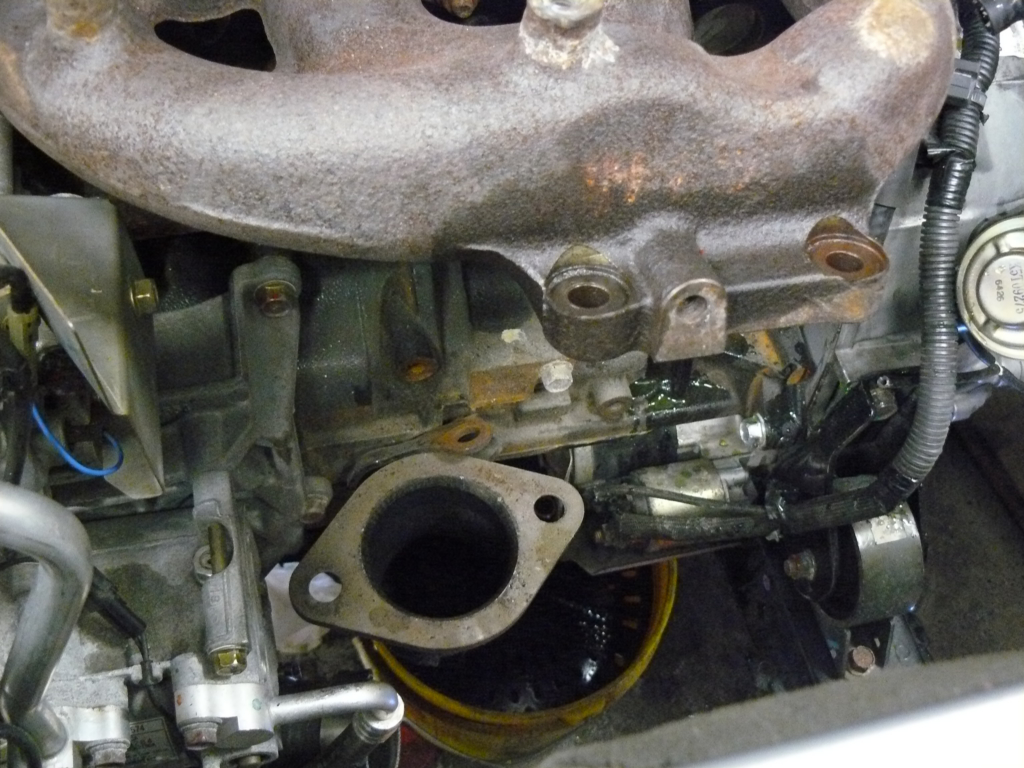
The radiator was next. I had to wait a few days for the parts from Mitsubishi to arrive, but they did and the radiator and fan slipped in place. New Samco hoses were used and a 50/50 mix of antifreeze and distilled water was mixed and installed using an AirLift tool. The AirLift uses compressed air to create a vacuum in the cooling system. It lets you know right away if you have a leak and when all is right the tool uses the vacuum to suck in all the new fluid. It is really a fool proof method of ensuring there is no trapped air in the cooling system.
With that task completed it was on to the intake system. I had to be careful to ensure that tubing and clamps would not interfere with the electric fan since things had gotten just a bit tighter in that area with the new radiator.
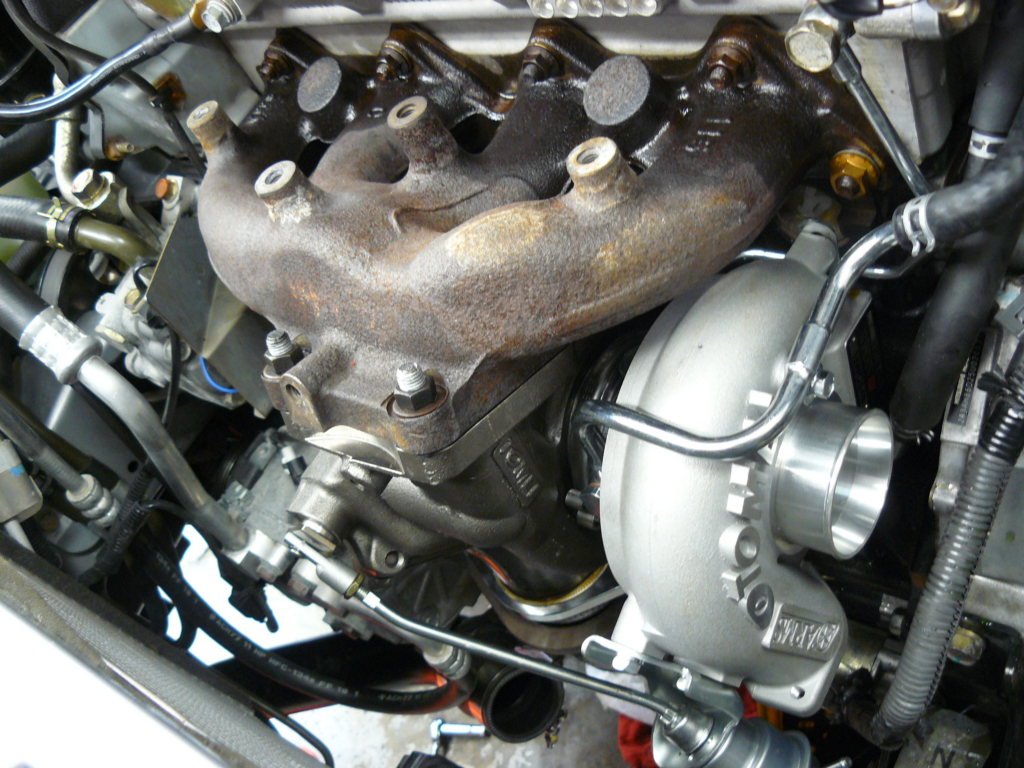
When everything was buttoned up I did a final check of connectors, clamps and bolts before I turned on the engine.
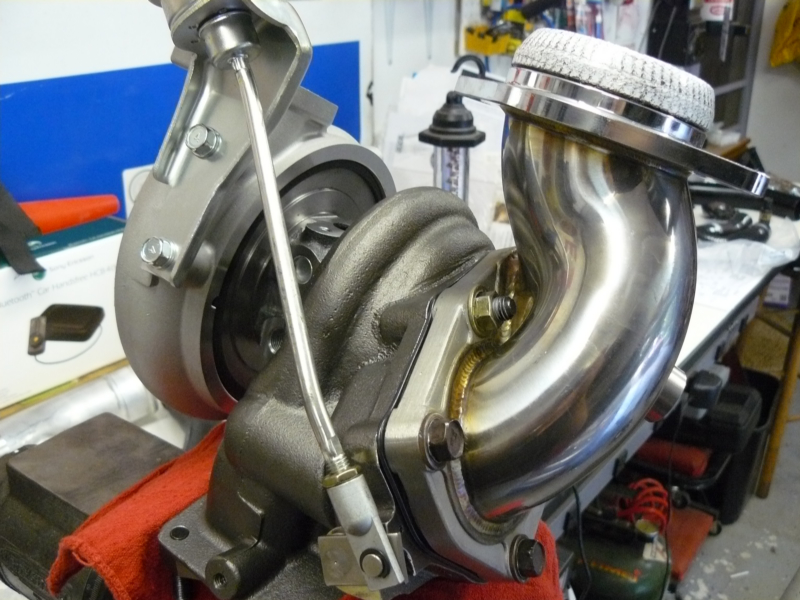
I let the engine warm up while I went over a few more things and put away wrenches. I was so looking forward to the first drive. It lasted about 100 yards before the CEL and then the engine started running far too rich. So back into the garage and continuing problem determination.


 JIM'S GARAGE
Leave a reply to markitude Cancel reply