

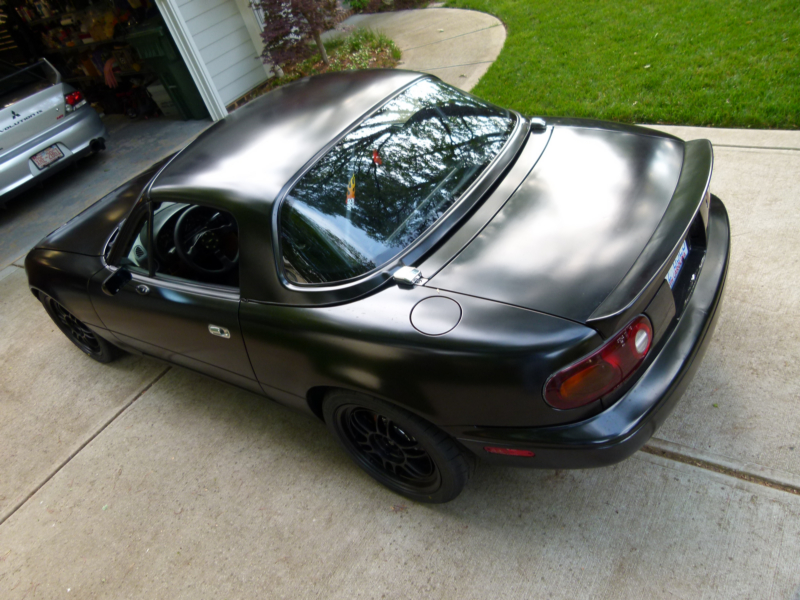
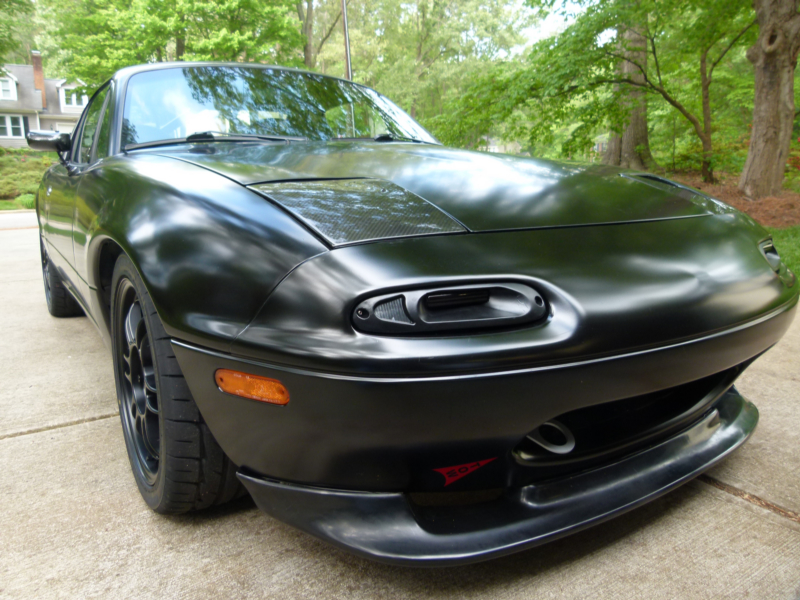
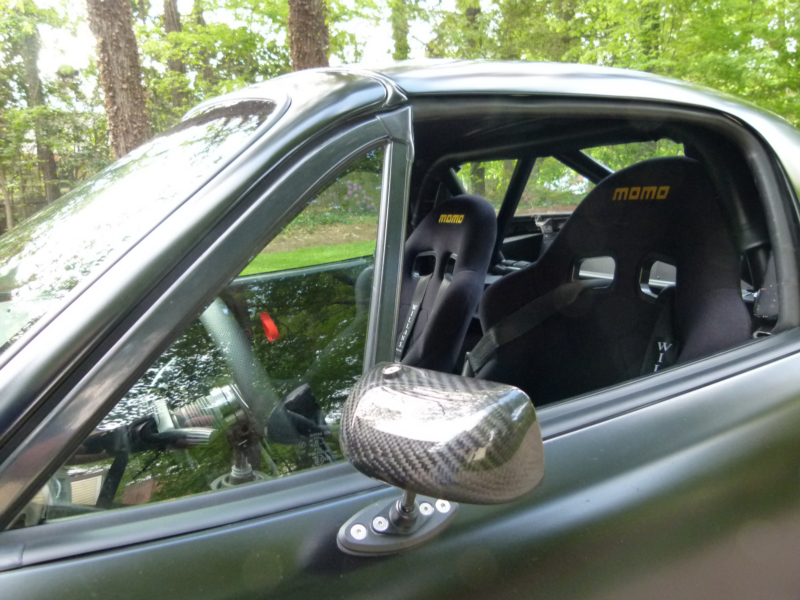
This 1996 Miata has come a long way since it became a track car project. It already had 151,000 miles on it but a lot of changes have taken place that will allow it to corner like never before.
Even with the best shocks and springs, the perfect anti-roll bars, the best brakes and suspension components there is one item that determines whether it reaches its potential or not. That is alignment.
If you have ever paid attention to all the preparation that goes on setting up a race car prior to a race much of has to do with balance and alignment. In Indy racing where the body and chassis have all been the same, the tires the same, and the engines the same (until this year), alignment and balance have made the difference between the front row or also ran cars.
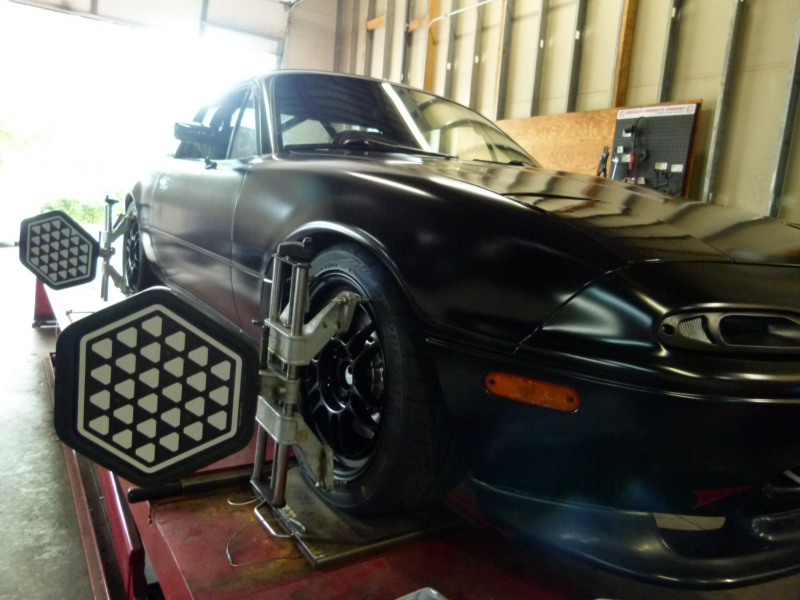
Today I brought the car in for an alignment and something known as corner balancing. I had aligned the car about 300 miles ago, but the fact is that it takes time and miles for the springs to settle in. Over the three hundred miles the rear of the car had settled in and the front had gone a bit toe-out.
Once on the alignment rack the starting measurements were checked. It was time to make some adjustments. When aligning a chassis you start with the rear. The rear gets adjusted for camber and toe. Camber is the amount of angle to the tire relative to the ground and the body of the car. A tire that tilts in at the top is said to have negative camber. On the Miata I was looking for about -1.5 degrees of camber and toe-in of 1/16 of a degree. That means the tires almost point straight ahead, but actually point in just a tiny bit.
The front has three settings that can be adjusted on the Miata. Camber and toe, like the rear, and caster. This third term speaks to the angle or incline of the front steering.
Caster is very important as it affects many things. First of all caster will cause the outside front tire to increase negative camber as the wheels are turned and this can result in more grip as the weight transfers to the outside during a turn. Caster also helps the steering wheel to come back to center position as you exit a turn. Thirdly, caster will act as a ramp to resist the weight transfer forward when you apply the brakes. This is called “dive” when the car noses down in braking.
On the front I wanted at least five degrees of caster and a little better than 1 degree of negative camber. Again, I wanted toe to be in about 1/16 of a degree.
Once the alignment was adjusted and locked in it was time to corner balance.
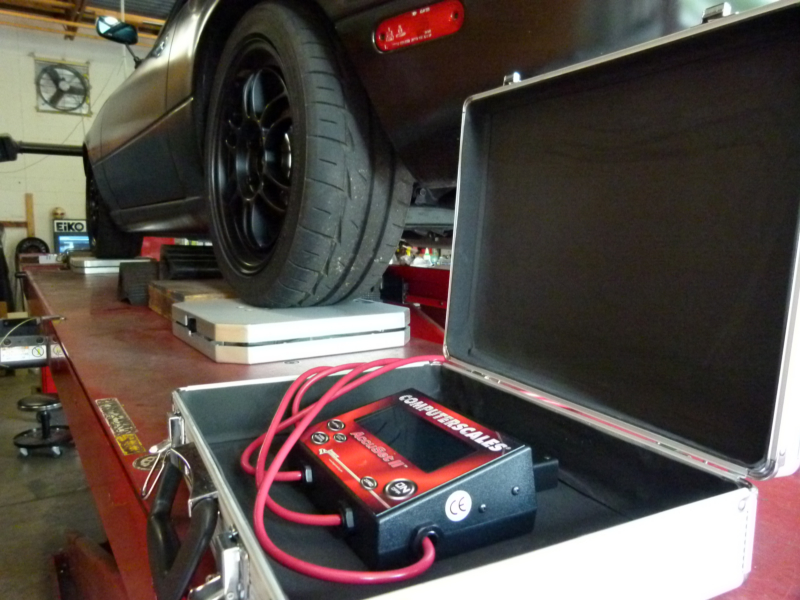
This process involves the use of special scales under each wheel. These are used to understand how weight is distributed at each tire’s contact point.
One thing to keep in mind is that I am doing this with a full fuel tank and weight stacked in the front seat to equal my own body weight.
If you have ever eaten in a restaurant on a four-legged table and discovered that one leg is short, you will see that the table rocks. In a moment you will start looking for a napkin or other article to shove under the short leg to keep it from rocking. With corner balancing it is much the same, but since the car has a suspension it is tough to tell which corner has the short leg. The scales will divulge which corner is light and since the shocks on the Miata are threaded the offending corner can be lengthened until the weight distribution is close to perfect.
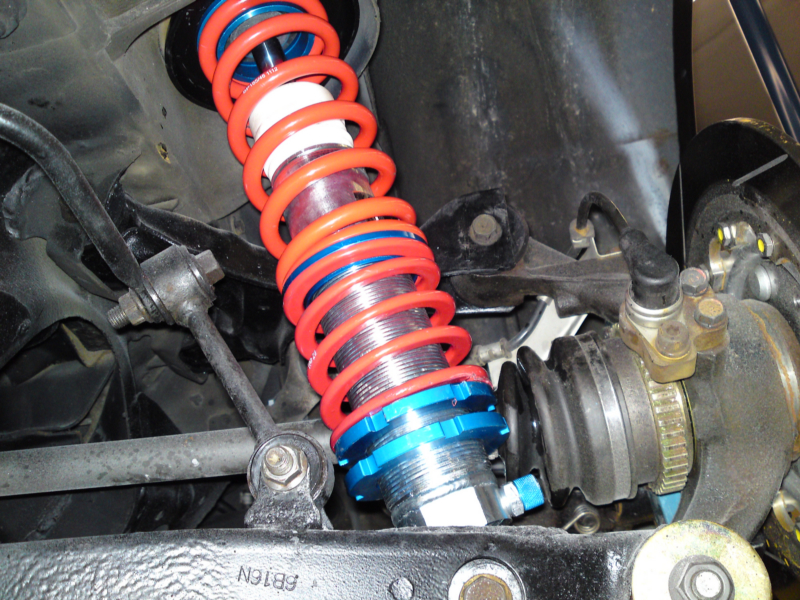
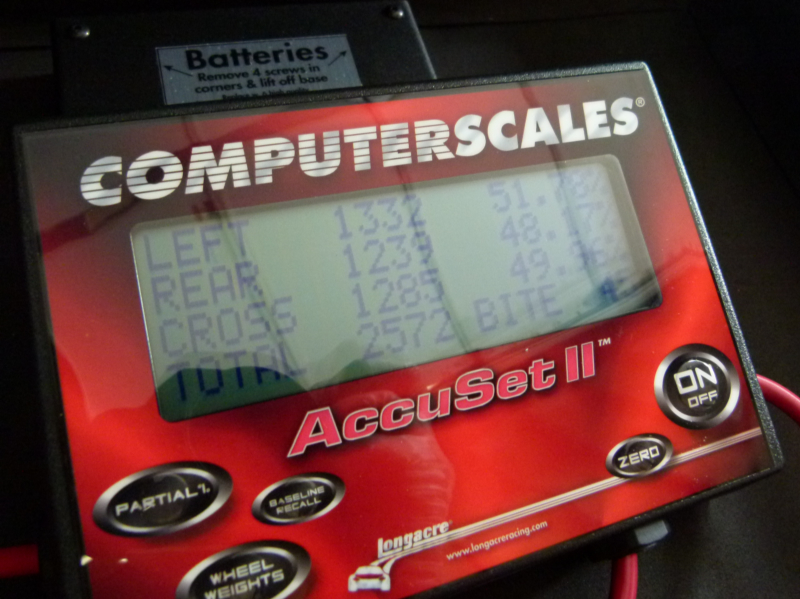
No, not all four corners will weigh the same. The weight distribution front to rear on a car can vary quite a bit. Most cars are quite front end heavy. My Mitsubishi Evolution has over 60% of its weight on the front tires. Lucky for me the Miata is very close to 50/50. In fact, it is 52% front and 48% rear.
In order to get the corners balanced a comparison of the sum of opposite corners is compared. In other words, you add the right front weight to the left rear, get a total, and then weigh the left front and add it to the right rear. If the sums are equal you are done.
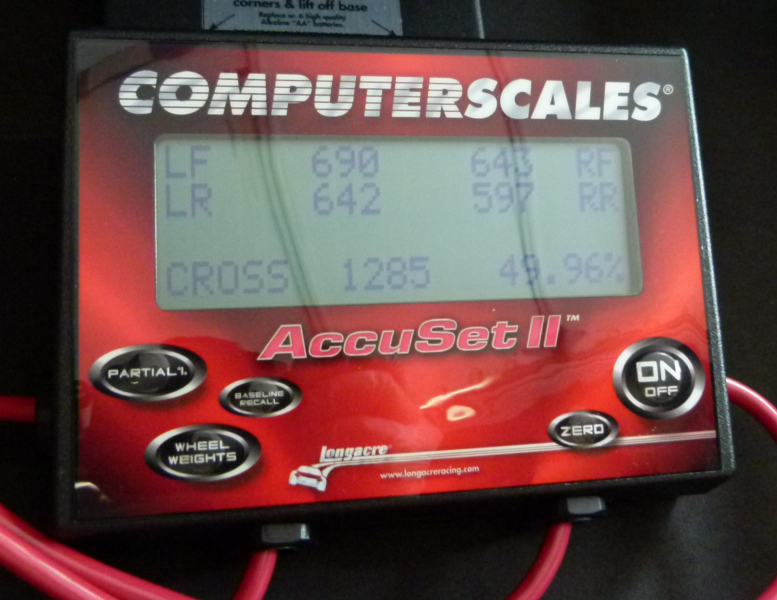
Of course they are not and I had to lengthen the right rear in order to get it to carry more weight. After some adjustment the sums were 50%/50%. Now the Miata should be balanced in terms of cornering. It would be equally fast at cornering left as well as to the right.
Upon taking it out for a test drive the difference in handling could really be appreciated. Now I could try the car on the track and see if I needed to tweak the alignment to get it to handle in a way that matches my own driving style.


 JIM'S GARAGE
Leave a reply to jimsgarage Cancel reply